Consultant Invoice Template
Consulting invoices are usually read by someone who did not hire you. The partner who approved the engagement passes it to accounts payable, and AP pays what matches the purchase order and rejects what does not. This template is built for that reality: engagement references, phases, pass-through expenses and corporate payment terms, laid out so an invoice clears on the first pass instead of the third.
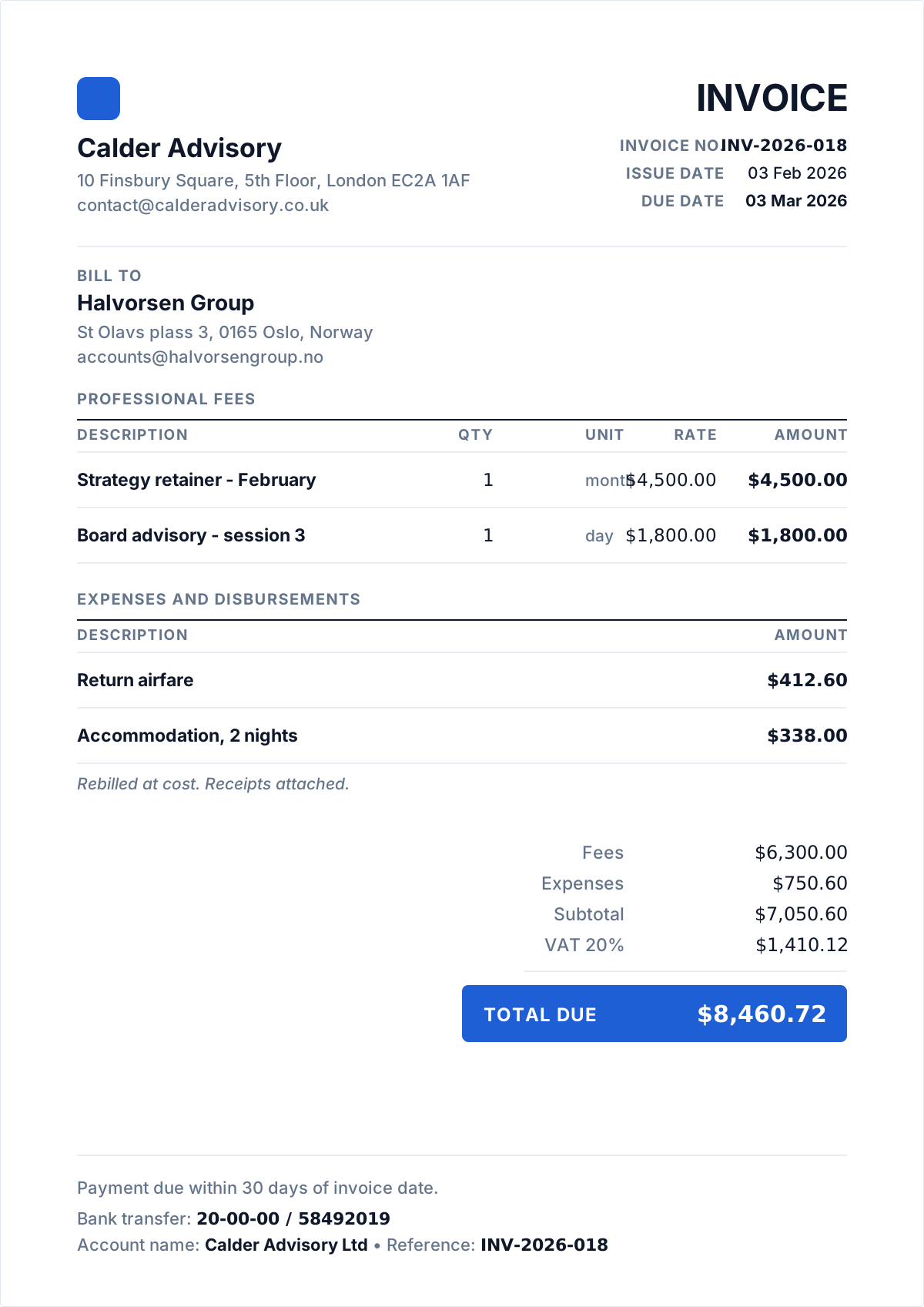
Retainer, day rate or project fee
Consulting engagements are priced three ways, and the invoice should make obvious which one is running.
- Monthly retainer — one line naming the period (“Advisory retainer, March 2026”), invoiced at the start of the period. If the retainer includes a capped number of days, say the cap in the description and put overage on its own line.
- Day rate — quantity in days, the rate as unit price, and the dates worked in the description. Half days should be 0.5, not a separate discounted line.
- Fixed project fee by phase — one line per phase with the deliverable named and the phase percentage shown, so a client paying against a signed statement of work can reconcile it line by line.
- Success or milestone fee — invoice only once the trigger condition has been met, and name the condition in the description. A success fee with no stated trigger is the single most disputed line in consulting.
Expenses and pass-through costs
Keep billable time and reimbursable expenses on separate lines, and never bury travel inside a day rate. Most client contracts cap expenses or require pre-approval above a threshold, and an invoice that blends the two forces AP to reject the whole document rather than query one line.
- Bill expenses at cost unless your contract allows a handling percentage, and say which you are doing
- List each expense category separately — travel, accommodation, subsistence, third-party licences
- Note whether expenses are inclusive or exclusive of tax; the treatment differs from your fee line in many jurisdictions
- Reference the approval (email date, ticket number) for anything above the contract's threshold
Getting through accounts payable
A consulting invoice that does not match the purchase order does not get paid, and nobody tells you why for three weeks. Before sending, check the four fields AP actually matches on.
- Purchase order number, exactly as issued — a transposed digit is a rejection
- The legal entity name on the PO, not the trading name or the parent group
- The engagement or statement-of-work reference
- Line descriptions that map to the PO's line descriptions, in the same order
Send the invoice to the AP inbox as well as your client contact. Invoices that sit in one person's inbox age quietly.
Terms for corporate clients
Net 30 is the default for corporate consulting and Net 45 or Net 60 is common with large enterprises, so price the delay in rather than fighting it. Invoice monthly on a fixed date rather than at the end of an engagement — a single large invoice at the close of a six-month project is both a cash-flow problem and an invitation to renegotiate. If the client runs payment batches, find out the cut-off date and issue before it; missing a batch by a day costs a fortnight.
Frequently asked questions
What should a consultant include on an invoice?
Your consultancy's name and registered address, the client's legal entity name, the purchase order or engagement reference, a unique invoice number, issue and due dates, a line per phase or period with the deliverable named, reimbursable expenses on separate lines, any tax, the total due, and payment details. Corporate accounts payable matches on the PO number and entity name, so both must be exact.
How do I invoice for a consulting retainer?
Invoice at the start of the period it covers, with one line naming the period explicitly — “Advisory retainer, March 2026”. If the retainer covers a set number of days, state the cap in the description and invoice any overage as a separate line at your day rate, so the client can see the base fee and the excess independently.
Should consulting expenses go on the same invoice as fees?
Yes, but on separate lines under their own heading. Combining them into a single figure makes reconciliation impossible for the client and usually triggers a query. Bill expenses at cost unless your contract permits a handling fee, and attach receipts if the engagement letter requires them.
What payment terms should a consultant use?
Net 30 from the invoice date is standard for corporate work; smaller clients often accept Net 14. What matters more than the number is invoicing on a predictable monthly date and hitting the client's payment batch cut-off. State the due date as an actual calendar date on the invoice rather than only as a term.
Why do corporate clients reject consulting invoices?
Almost always a mismatch rather than a dispute: a missing or wrong purchase order number, the trading name instead of the legal entity on the PO, line descriptions that do not correspond to the PO lines, or an expense above the approved threshold with no approval referenced. Fixing those four things clears most rejections before they happen.
Can I charge for a consulting proposal or a scoping call?
You can, and consultants increasingly do for substantial discovery work, but it has to be agreed before the work — a scoping fee first appearing on an invoice reads as a bait and switch. The common structure is a paid discovery engagement invoiced separately, with the fee credited against the main project if the client proceeds; put that credit on the project invoice as a discount line so it is visible.
Ready to invoice?
Fill in the generator, download the PDF, and send it. No signup, no watermark, and your details stay in your browser.
Create your free invoice